OpenAI Is Stopping Its Cursor Partnership: What Happened and What It Means for Developers
RELEASED DATE: 29 August 2026
5 Minutes Read
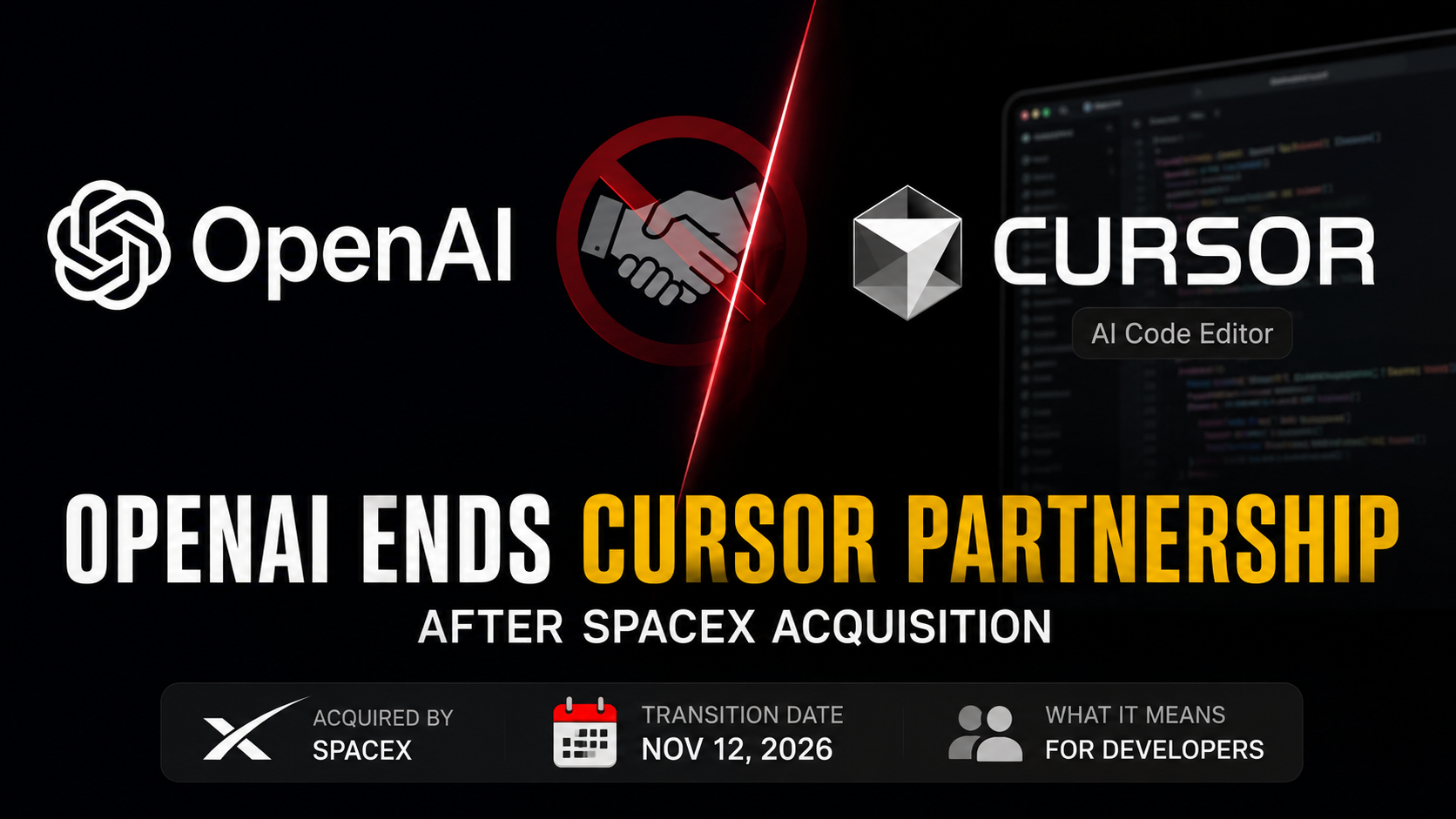
[OpenAI is ending its Cursor partnership after SpaceX’s acquisition of Cursor, marking a major shift for AI coding and developer tools.]
OpenAI has decided to wind down its agreement to provide its AI models to Cursor, bringing a major change to a relationship that had become important for developers using AI-assisted coding tools. The announcement came shortly after Cursor became part of SpaceX, making the situation more than a simple change in a software partnership. OpenAI said on August 28, 2026 that it had notified SpaceX of its intention to end the contract and proposed November 12, 2026 as the shutdown date. Until then, the existing arrangement is expected to continue, although Cursor could choose to end access earlier.
The decision is significant because Cursor has been one of the most visible AI coding environments supporting models from several major AI companies. Developers have been able to use OpenAI models alongside offerings from Anthropic, Google and other providers, rather than being locked into a single model family. Cursor's own documentation currently lists OpenAI among the frontier-model providers supported by the platform. OpenAI's decision therefore does not mean that Cursor itself is shutting down or that AI coding inside Cursor is ending. Instead, the dispute is specifically about OpenAI's direct model supply agreement with Cursor and what happens after Cursor's change in ownership.
Why OpenAI Is Ending the Agreement
OpenAI's explanation focuses primarily on ownership, contractual obligations and confidence in future compliance. The company said it could not be confident that SpaceX would use OpenAI technology within its terms of service, pointing to what OpenAI described as previous contract violations involving companies controlled by Elon Musk. OpenAI also said that its custom agreement with Cursor contains a provision allowing cancellation within a limited period after a change of control.
That change of control happened recently. SpaceX completed its acquisition of Anysphere, the company behind Cursor, on August 14, 2026. A filing with the U.S. Securities and Exchange Commission records the transaction as a completed merger and gives Cursor an implied equity value of $60 billion. Cursor also publicly confirmed on the same date that it had officially become part of SpaceX.
The timing is therefore important. OpenAI did not announce that it was abandoning Cursor because Cursor had suddenly stopped being useful or because developers had stopped using OpenAI models. Rather, the contractual relationship changed after Cursor became owned by SpaceX, and OpenAI decided to exercise its rights under the agreement. OpenAI said it was giving the maximum notice available under the contract so developers would have as much time as possible to prepare for the transition.
Cursor Was Already Closely Connected With OpenAI
The relationship between the two companies was not new. Cursor has worked with OpenAI for several years, and its engineering team has published technical material describing how it adapted its agent system for OpenAI's coding models. In December 2025, Cursor described its work with OpenAI around Codex models and said that it had been partnering with OpenAI to make its models available to developers through Cursor's agent.
That relationship was still active much more recently. In April 2026, Cursor announced that GPT-5.5 was available in Cursor and described a partnership with OpenAI around the model's availability. The announcement shows how quickly the relationship moved from collaboration around model releases to a termination decision following the ownership change.
For developers, this makes the announcement more notable than a routine supplier change. Cursor was built around the idea of giving developers access to multiple frontier models, and OpenAI models had been one part of that ecosystem. The company is not losing its entire AI model strategy simply because one provider is winding down a direct arrangement, but the removal of a major provider can still affect model choice, workflow preferences and how developers use particular agents.
What Happens to OpenAI Models in Cursor?
The most important date for existing users is November 12, 2026, because that is OpenAI's proposed date for ending its direct model supply agreement with Cursor. OpenAI has described this as a proposed transition date rather than an already completed shutdown, and its help documentation says the official termination date will be confirmed between the companies.
This distinction matters because headlines saying that OpenAI has already "removed" its models from Cursor can be misleading. The announcement is about winding down the agreement, not an immediate disappearance of OpenAI models from the editor. Developers therefore still have time to understand their options and decide whether they want to change models, use their own OpenAI API access where supported, or move particular workflows to another provider.
OpenAI's current guidance gives developers several possible routes. Users can bring their own OpenAI API key for supported local Chat and Agent features in Cursor, use the Codex IDE extension with a ChatGPT subscription or OpenAI API key, or access OpenAI models through compatible gateway providers such as Amazon Bedrock or Azure. OpenAI also warns that the bring-your-own-key approach does not apply to every Cursor feature, including Cursor Tab, Auto, Cloud or Background Agents, Automations, the Cursor CLI, and Cursor's API and SDK.
Cursor Is Not Becoming an OpenAI-Free Product Overnight
Cursor's position is particularly interesting because it has never depended exclusively on OpenAI. Its current model documentation lists models from OpenAI, Anthropic, Google, SpaceXAI and other providers. Cursor also operates its own model pool, including Cursor's own models alongside Grok offerings.
That means the end of the OpenAI partnership does not automatically translate into the end of Cursor's AI coding capabilities. The platform's broader strategy is clearly based on model choice and routing, allowing developers to select different models depending on the task, cost and performance requirements. Cursor's current documentation describes separate usage pools for Cursor's own models and third-party models, reinforcing the idea that the product is designed to operate across multiple AI providers.
The bigger change could therefore be seen in the relationship between Cursor and OpenAI rather than in Cursor's basic product. Developers may continue writing code with powerful AI models inside the editor, but OpenAI will no longer be supplying future models to Cursor under the existing direct agreement. OpenAI specifically said that it would not provide future models through the arrangement, mentioning its upcoming model Astra in the explanation for the decision.
SpaceX's Acquisition Changed the Situation
Cursor's acquisition is central to understanding the entire story. SpaceX announced the acquisition of Anysphere, Cursor's parent company, in June, and the transaction was completed on August 14. The SEC filing records the merger as giving Cursor an implied equity value of $60 billion, making it one of the most consequential acquisitions in the AI coding market.
Cursor itself presented the acquisition as an opportunity to obtain much greater computing capacity. In its announcement confirming the deal, Cursor said that becoming part of SpaceX would give it access to a large GPU fleet and allow the company to build stronger models at lower cost. It also pointed to Grok 4.6 as an early example of what the combined capabilities could produce.
That creates a very different competitive position for Cursor. Before the acquisition, Cursor was an independent coding company that could integrate models from several competing AI providers. After the acquisition, it became part of a much larger technology group with its own AI ambitions and its own model ecosystem. The OpenAI relationship consequently moved from being a straightforward partnership between independent companies to a relationship involving a direct competitor and a company controlled by Musk.
The Musk and OpenAI Relationship Adds Another Layer
There is also a long-running dispute between Elon Musk and OpenAI that makes the decision particularly sensitive. OpenAI's official explanation does not frame the move simply as a personal disagreement, however. Its stated concern is whether its technology can be used within its contractual terms and whether it can maintain the necessary safety and compliance protections when dealing with SpaceX.
OpenAI specifically referred to its experience with other Musk-controlled companies. The company said that after Musk acquired Twitter, which OpenAI describes as now being part of SpaceX, it believed contractual terms had been violated. OpenAI also referred to statements made under oath earlier this year concerning xAI and alleged use of OpenAI technology in violation of OpenAI's terms. These are OpenAI's stated reasons for its decision and should be distinguished from independently established findings about the underlying disputes.
Musk has publicly dismissed the decision and criticized OpenAI leadership, according to Reuters. Cursor's leadership, meanwhile, has indicated that discussions with OpenAI were still ongoing, suggesting that the practical transition may continue to develop before the proposed November date.
Why the Decision Matters for AI Coding
AI coding has changed the competitive landscape because developers are no longer choosing only between traditional editors and traditional programming assistants. Modern coding agents can understand large codebases, generate files, run commands, inspect errors and work through multi-step programming tasks. The model provider behind those capabilities has therefore become an important part of the developer experience.
Cursor's ability to combine models from several providers has been one of its important characteristics. The end of direct access to future OpenAI models could make the competition between providers more visible inside the development environment. Anthropic, Google, SpaceXAI and Cursor's own models can potentially become more important depending on how the platform evolves. Cursor's current documentation already shows that it supports models from multiple major providers rather than relying on one company.
For developers, this could actually make model comparison more important rather than less. A developer who previously preferred an OpenAI model for a particular coding task may now need to evaluate whether another model delivers comparable reasoning, code generation, debugging or agent performance. Teams may also need to review internal prompts and workflows if they were specifically optimized around a particular model's behavior.
What Developers Should Know Before November
Developers who currently use OpenAI models through Cursor do not need to assume that their entire setup will stop working immediately. The proposed transition date gives them time to check which Cursor features depend on directly supplied models and which can operate through other providers or Cursor's own model infrastructure. OpenAI's documentation also makes clear that some features have different limitations around API keys and gateways, so simply adding an OpenAI API key is not a universal replacement for the existing arrangement.
The practical response is therefore to identify where OpenAI models are being used today and determine what happens to each workflow after the transition. A developer who uses local Chat or Agent features may have different options from someone relying heavily on Cloud Agents, Background Agents or Cursor's automated workflows. Teams should also consider their billing setup because using an OpenAI API key means API usage is billed separately from a Cursor or ChatGPT subscription.
There is also no need for developers to immediately abandon Cursor. The platform continues to support multiple AI providers, and its current model system includes both first-party and third-party options. The more sensible approach is to watch the final transition details, test alternative models against real projects and make changes only where a particular workflow actually depends on OpenAI's direct integration.
A Bigger Shift Is Happening in AI Infrastructure
The dispute also highlights a larger change taking place across the AI industry. AI applications increasingly depend on several layers at once: the application itself, model providers, infrastructure companies, data systems and distribution platforms. When one company changes ownership, a previously straightforward relationship between two layers can suddenly become strategically complicated.
Cursor is a particularly good example because the company sits between developers and several AI model providers. Its value is not simply the editor itself; it also comes from the way it connects developers with increasingly capable AI systems. Once Cursor became part of SpaceX, the incentives around those relationships naturally changed. SpaceX has its own AI ambitions, Cursor has its own models and OpenAI is competing for developers and AI infrastructure demand.
The situation therefore illustrates why AI partnerships can be more fragile than traditional software integrations. A model provider may be comfortable supplying technology to an independent application but reconsider that relationship when the application becomes part of a major competitor's ecosystem. At the same time, developers increasingly expect AI tools to support multiple models so that they are not completely dependent on a single provider. The Cursor case shows both sides of that trend happening at the same time.
What Comes Next for Cursor and OpenAI
For now, the relationship is in a transition period rather than an immediate shutdown. OpenAI has proposed November 12 as the date when its direct supply arrangement with Cursor would end, while Cursor can continue using other models and has its own model development efforts under SpaceX. OpenAI has also said it is prepared to support developers during the transition.
The outcome could ultimately be more important for the AI coding market than for either company's short-term product lineup. Cursor has the backing and computing resources of SpaceX, while OpenAI continues to develop its own coding and agent products. The two companies may increasingly compete for the same developers from opposite sides of the stack: Cursor through an AI-native development environment and OpenAI through its models and coding tools.
For developers, the most useful takeaway is that the announcement is not a warning that AI coding is going away. It is evidence that the AI coding market is becoming increasingly competitive and that relationships between model providers and applications can change quickly when ownership and strategic interests change. Cursor will continue to offer multiple AI models, while OpenAI's direct relationship with the platform is being wound down. The proposed November 12 date gives users time to adjust, and the final details may still evolve as the two companies continue discussions.
In the end, the unusual part of this story is not simply that OpenAI is leaving a partnership. It is that a relationship built over several years changed almost immediately after Cursor moved from being an independent AI coding company into SpaceX's ecosystem. That makes the decision a useful snapshot of where the AI industry is heading: model capability still matters, but ownership, infrastructure, contracts, safety requirements and competitive positioning increasingly matter just as much.
Authors
Want To Read Similar Posts
RELEASED DATE: 24 October 2026
READ TIME: 14 Minutes Read
October 2026 Security Alert: eMudhra Certificate Compromise, Node.js Vulnerabilities and PHP2Shell
October 2026 security alert: Learn about the eMudhra certificate compromise, Node.js vulnerabilities, PHP2Shell, patched versions and fixes.
RELEASED DATE: 17 October 2026
READ TIME: 7 Minutes Read
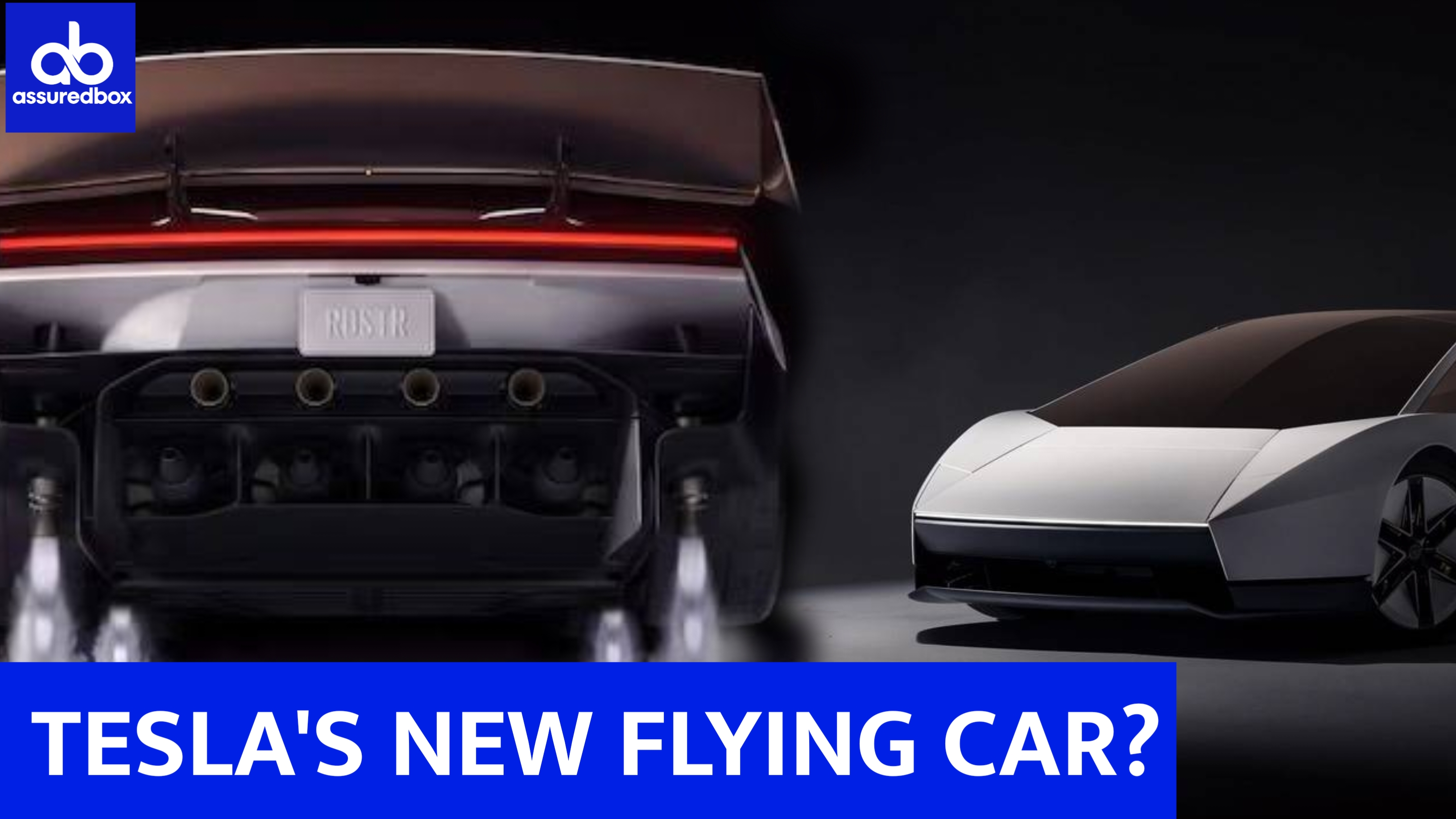
Tesla’s New Flying Car: Roadster 2, Features, Price, Launch Date and What Makes It Different
Explore Tesla's new flying car, the next-generation Roadster, its features, thruster technology, expected price, performance and launch date.
RELEASED DATE: 10 October 2026
READ TIME: 5 Minutes Read
US Suspends 8 Tech Firms From PERM: Full List and Impact
The US has suspended PERM processing for eight tech firms, including Microsoft, TCS and Infosys. Here's the full list and impact on green card applicants.

RELEASED DATE: 3 October 2026
READ TIME: 6 Minutes Read
What Documents Are Required to Sell a Property in Dubai?
Learn which documents are required to sell a property in Dubai, including title deeds, NOCs, mortgage papers, and legal requirements for sellers.

RELEASED DATE: 29 September 2026
READ TIME: 4 Minutes Read
Yo Yo Honey Singh Introduces Casa Tupka Tequila With New Music Release
Yo Yo Honey Singh launches Casa Tupka, a premium tequila brand made in Mexico, alongside his new music release Casa Tupka Anthemo.
RELEASED DATE: 27 September 2026
READ TIME: 10 Minutes Read
Vi’s Free International Roaming in 170+ Countries: What Changes for Customers and the Company
Vi has launched free international roaming in 170+ countries with selected plans. Here’s what changes for customers, Vi and Vodafone Idea shares.