
Tesla’s New Flying Car: Roadster 2, Features, Price, Launch Date and What Makes It Different
RELEASED DATE: 17 October 2026
7 Minutes Read
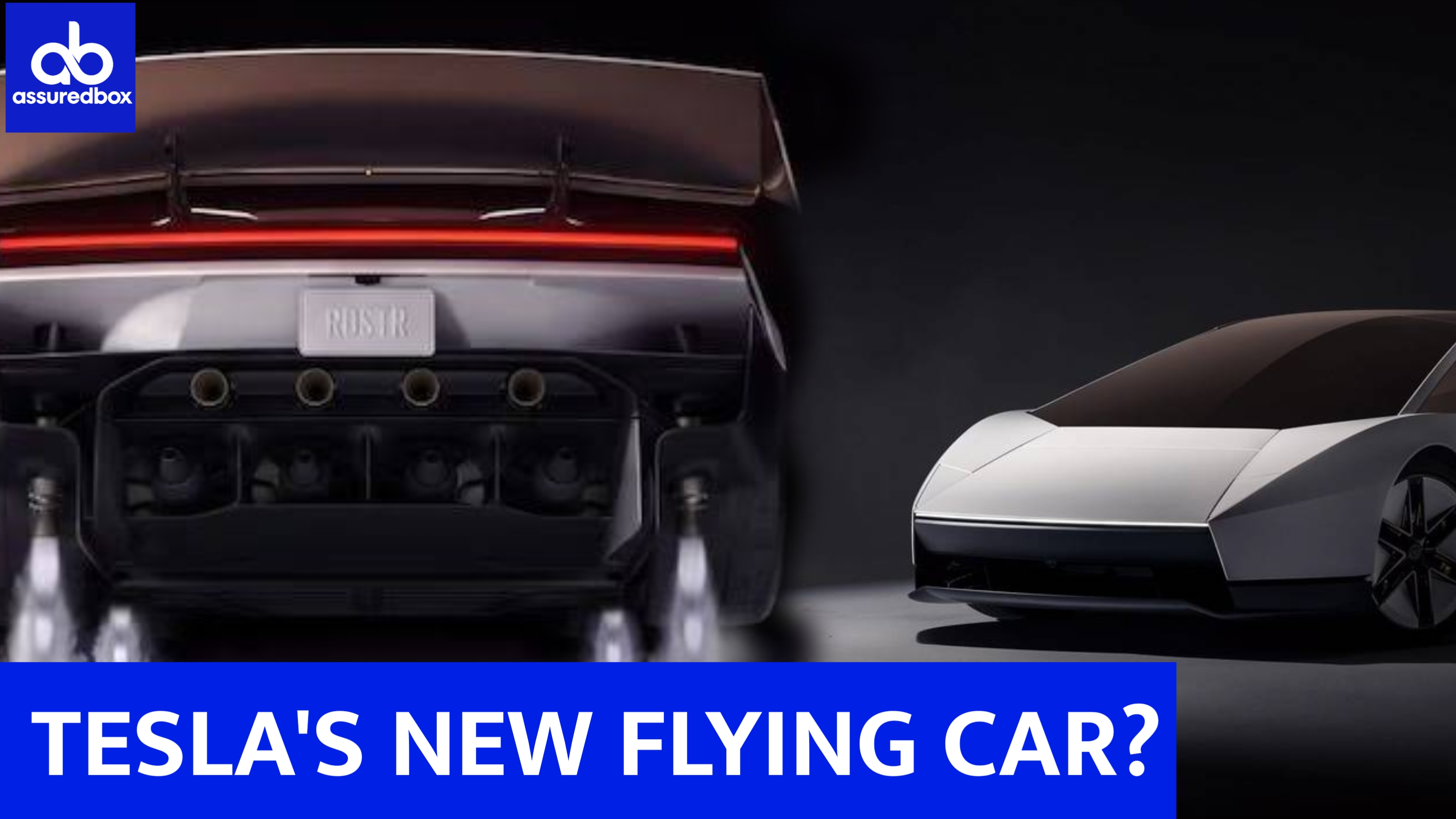
[Tesla’s futuristic Roadster and a concept of its potential flying-car technology, featuring a rocket thruster system and a sleek electric sports car design.]
For years, flying cars have occupied an unusual place between science fiction and real-world engineering. They have appeared in futuristic films, concept designs and technology demonstrations, but making a vehicle that can both drive on roads and move through the air has remained a difficult challenge. Now, Tesla has brought that idea back into the spotlight with its new Roadster, a high-performance electric sports car equipped with technology designed to give it limited flight capabilities.
The new Tesla Roadster was demonstrated on October 15, 2026, at a SpaceX testing facility in Texas. The event was unlike a conventional car launch. Instead of focusing only on acceleration, exterior design or battery performance, the demonstration showed the vehicle climbing a curved ramp, moving upside down with the help of a suction system, flipping through the air and landing back on its wheels using onboard thrusters.
The demonstration immediately raised a bigger question: has Tesla finally built a flying car, or is the company pushing an extraordinarily powerful electric sports car into territory that most production vehicles have never entered?
The answer depends on what someone expects from a flying car. The Roadster has demonstrated an airborne manoeuvre, but that is very different from a vehicle that can take off, travel long distances through the air and land wherever its owner needs to go. Understanding that difference is essential to understanding what Tesla has actually introduced.
What Is Tesla’s New Flying Car, and How Does It Work?
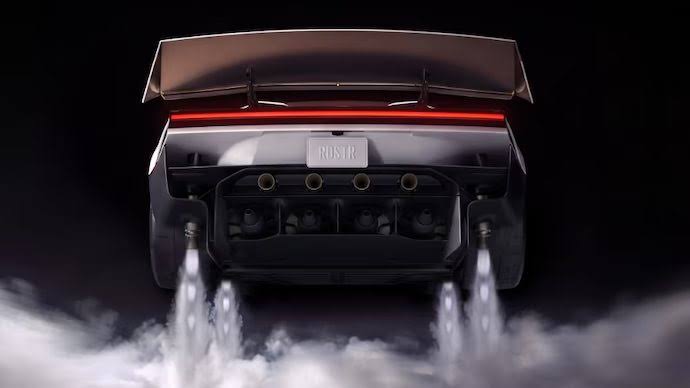
Tesla's new Roadster is not a traditional aircraft designed around wings, a cockpit and sustained flight. It remains an electric sports car built primarily around road performance, with additional hardware intended to introduce capabilities normally associated with aerospace engineering.
The most unusual part of the vehicle is its thruster system, developed through collaboration with SpaceX. Rather than relying on conventional jet engines burning fuel, the system uses cold-gas thrusters to produce thrust. In simple terms, pressurised gas is released through strategically positioned nozzles, generating force that can push the vehicle in particular directions.
On an ordinary electric car, acceleration comes from electric motors turning the wheels. With the Roadster's advanced configuration, the thrusters introduce another way to generate force. Depending on the configuration, that force can contribute to acceleration or, in the specialised flight-equipped version, help lift and move the vehicle through the air.
The arrangement is particularly interesting because it brings together two different engineering challenges. An electric car needs to manage weight, battery performance, grip and stability on the road. A vehicle that briefly leaves the ground must also control its position, orientation and movement without relying on tyres touching the road.
Tesla's demonstration showed the vehicle executing an airborne flip and landing. That is a significant engineering spectacle, but it should not be confused with evidence that the car can fly like an aeroplane or operate like a conventional air taxi. No established public specification has yet demonstrated a useful cruising altitude, sustained flight duration or an everyday point-to-point flying service.
Another unusual feature is the Roadster's multi-mode suction system. Fans and an underbody sealing arrangement are designed to draw air from beneath the vehicle, creating downforce that presses it towards the driving surface. This can help the car maintain grip under demanding conditions, and the system was also used in the dramatic upside-down demonstration.
The two technologies perform different jobs. The suction arrangement is about holding the vehicle against a surface, while the thrusters produce directional force. Together, they make the Roadster considerably more unusual than a conventional electric supercar.
However, the engineering behind a demonstration is only part of the story. The real test will come when the final vehicle has to operate repeatedly, carry its intended occupants, meet safety requirements and deliver the same performance outside a controlled testing environment.
Tesla Roadster 2 Features, Performance and Available Versions
The flying capability is attracting most of the attention, but the Roadster is also being developed as a high-performance electric vehicle. Its promised figures are ambitious, particularly when compared with conventional road-going sports cars.
Tesla presented a zero-to-60-mph acceleration target of less than one second and a top speed exceeding 230 mph. The company also described a driving range of more than 300 miles on a charge. These are manufacturer-stated performance figures, not independently established results from a production vehicle available to customers.
Acceleration below one second would be remarkable even by supercar standards. Reaching that level consistently involves more than producing enormous power. Tyre grip, vehicle mass, traction management, suspension behaviour and the way force is delivered all become important. Adding thrusters introduces another technical challenge: the vehicle must remain controllable when the forces acting on it are no longer coming exclusively from the wheels.
The available configurations are also important because not every Roadster will have the same capabilities.
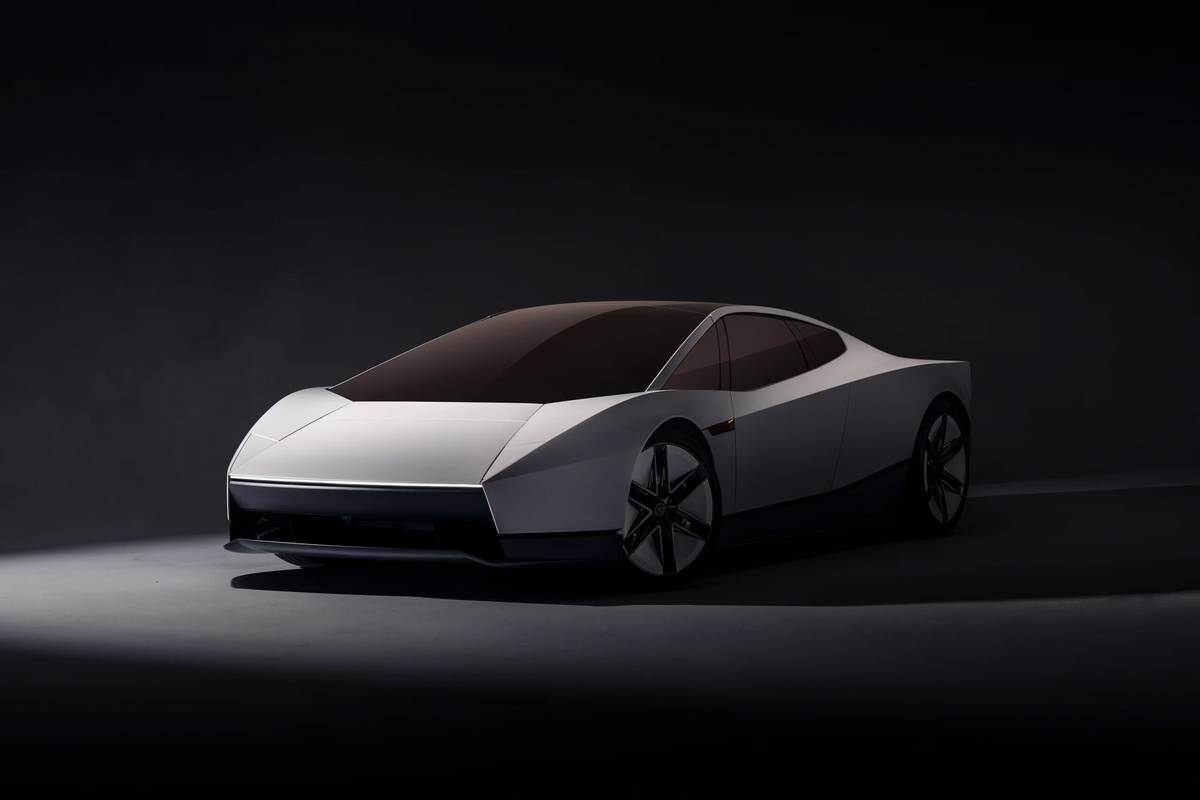
The Performance version is the conventional road-oriented configuration, designed to seat two people. It focuses on sports-car performance and includes the active aerodynamic and suction technology described for the Roadster. Buyers should not assume that this version includes the complete flight system.
The Thrust version adds acceleration thrusters at the rear and is presented as a more extreme, track-focused configuration. It is also designed for two occupants. Its advertised abilities do not mean that it has the same full airborne capability as the specialised Rocket version.
The Rocket version is the most unusual configuration. It is described as a single-seat model with a complete flight system, including thrusters positioned around the vehicle to support upward, forward and rotational movement. This is the version associated with Tesla's flying-car claims. It is also described as invite-only and is not approved for public-road use.
These distinctions matter because online discussions can make it sound as though every new Roadster will be able to fly. That is not what the three configurations indicate. The full flight system belongs to the specialised Rocket version, and its eventual availability, operating restrictions and final specifications remain important considerations.
There is another reason to approach the performance figures carefully: the vehicle has not yet entered customer production. A successful demonstration can prove that a particular manoeuvre is possible under specific conditions, but it cannot by itself establish long-term durability, consistent performance or the final specification of every production car.
Tesla Flying Car Price, Booking and Expected Launch Date
Price is another area where it is important to distinguish between what is known and what remains unsettled.
Tesla has not announced a definitive final purchase price for the newly revealed Roadster configurations. The original next-generation Roadster was presented years ago with a starting price of around $200,000, but that historical figure should not be treated as a confirmed price for every version of the new vehicle.
The reservation information following the latest demonstration listed a $50,000 deposit for the Performance version and a $250,000 deposit for the Thrust version. Those figures are deposits, not the complete vehicle prices. The Rocket version is described as invite-only, with its full flight equipment making it a very different proposition from an ordinary electric sports car.
For potential buyers, the practical question is not simply how much money is needed to reserve the vehicle. They will also need clear information about the final price, delivery terms, production specification, warranty coverage and the conditions under which each version can be operated.
The production timeline deserves similar caution.
The second-generation Roadster was originally unveiled in 2017, with deliveries once expected much earlier than the current schedule. The programme subsequently experienced repeated delays. Following the October 2026 demonstration, production was targeted for 2028.
That is a stated future target, not confirmation that customers will receive their vehicles at a guaranteed date. The distinction is particularly relevant for a vehicle that combines a new high-performance platform with specialised thrusters and a flight-oriented configuration.
There is also a difference between beginning production and making a vehicle widely available. A manufacturer might begin with limited production, offer certain configurations to selected customers or face additional work before a particular version becomes available in different markets.
The Rocket version raises even more questions. Its flight equipment, one-seat layout and stated public-road restrictions mean that its availability cannot be judged using the same assumptions as a conventional two-seat sports car.
For now, anyone considering a reservation should look beyond the excitement of the demonstration and examine the precise terms attached to the configuration they are interested in.
Is Tesla's Flying Car Actually Useful, and Can It Fly on Public Roads?
This is where the new Roadster becomes more complicated than its name and demonstration suggest.
A vehicle making a brief airborne jump is not the same as a practical flying car. Everyday airborne transportation would require reliable take-offs and landings, predictable control, meaningful flight endurance, appropriate emergency procedures and a way to operate safely around buildings, power lines, aircraft and other vehicles.
Tesla has demonstrated a dramatic airborne manoeuvre, but there is not yet enough established information to treat the Roadster as a practical replacement for conventional transport. Its demonstrated capabilities do not establish that it can fly across a city, bypass traffic for an entire journey or operate like a small aircraft.
The legal question is equally important.
Road vehicles and aircraft operate under different safety and regulatory frameworks. A vehicle that can move through the air introduces questions that ordinary cars do not have to answer in the same way. Where can it take off? Where can it land? Who is responsible for controlling its flight? What happens if a thruster or control system fails? How would it be allowed to operate near other road users?
These are not minor details that can be solved simply by adding more powerful hardware.
The Rocket version's stated lack of approval for public-road use is particularly significant. A technical demonstration does not automatically make a vehicle legal for ordinary driving, much less for flight above public roads. Rules can also differ between jurisdictions, so approval in one location would not establish universal permission.
Practicality raises a separate issue. Most people interested in a flying car imagine being able to leave home, avoid traffic and arrive at their destination faster. The Roadster's current proposition is much closer to an extreme performance vehicle than a general-purpose flying transport system.
Its technology could still prove interesting. Cold-gas thrusters and advanced control systems may offer lessons for future automotive engineering, particularly where rapid changes in force and vehicle stability are involved. But translating a spectacular demonstration into a safe, repeatable product is a different challenge from making the demonstration itself work.
For Tesla, the Roadster also serves another purpose: it presents the company as a manufacturer willing to experiment beyond conventional electric-car design. The original Roadster helped establish Tesla's early reputation by showing that an electric vehicle could be desirable and performance-oriented. The next-generation model attempts to make a similar statement through a much more extravagant engineering idea.
That does not mean the flying capability will become a normal feature of future cars. It means Tesla is exploring what happens when electric-car engineering meets technology developed for a very different kind of vehicle.
The Roadster's ultimate value will depend on what survives the move from demonstration to production. Can its unusual systems be made dependable? Will customers be able to obtain the promised performance? How much will the specialised versions cost? And what capabilities will actually be available to an owner, rather than shown during a carefully controlled event?
Those questions will matter more than the spectacle once the initial excitement fades.
Tesla's new Roadster has made the idea of a flying car feel closer to reality, but it has not yet made everyday flying cars a reality. The vehicle has demonstrated a remarkable airborne manoeuvre and introduced an unusually ambitious set of engineering features. Turning those capabilities into a practical, approved and deliverable product is the harder part still ahead.
For now, the Roadster is best understood as an experimental, high-performance electric sports car with a specialised flight-capable version—not as a car that is ready to lift off in the middle of ordinary traffic.
Authors
Want To Read Similar Posts

RELEASED DATE: 24 October 2026
READ TIME: 14 Minutes Read
October 2026 Security Alert: eMudhra Certificate Compromise, Node.js Vulnerabilities and PHP2Shell
October 2026 security alert: Learn about the eMudhra certificate compromise, Node.js vulnerabilities, PHP2Shell, patched versions and fixes.
RELEASED DATE: 10 October 2026
READ TIME: 5 Minutes Read
US Suspends 8 Tech Firms From PERM: Full List and Impact
The US has suspended PERM processing for eight tech firms, including Microsoft, TCS and Infosys. Here's the full list and impact on green card applicants.

RELEASED DATE: 3 October 2026
READ TIME: 6 Minutes Read
What Documents Are Required to Sell a Property in Dubai?
Learn which documents are required to sell a property in Dubai, including title deeds, NOCs, mortgage papers, and legal requirements for sellers.

RELEASED DATE: 29 September 2026
READ TIME: 4 Minutes Read
Yo Yo Honey Singh Introduces Casa Tupka Tequila With New Music Release
Yo Yo Honey Singh launches Casa Tupka, a premium tequila brand made in Mexico, alongside his new music release Casa Tupka Anthemo.

RELEASED DATE: 27 September 2026
READ TIME: 10 Minutes Read
Vi’s Free International Roaming in 170+ Countries: What Changes for Customers and the Company
Vi has launched free international roaming in 170+ countries with selected plans. Here’s what changes for customers, Vi and Vodafone Idea shares.

RELEASED DATE: 25 September 2026
READ TIME: 10 Minutes Read
Google Gemini Hacks: How AI Security Tests Exposed Real-World Risks
Google Gemini security incidents explained, including AI-driven hacks, prompt injection, agent risks, Langflow RCE, and key lessons for businesses.